

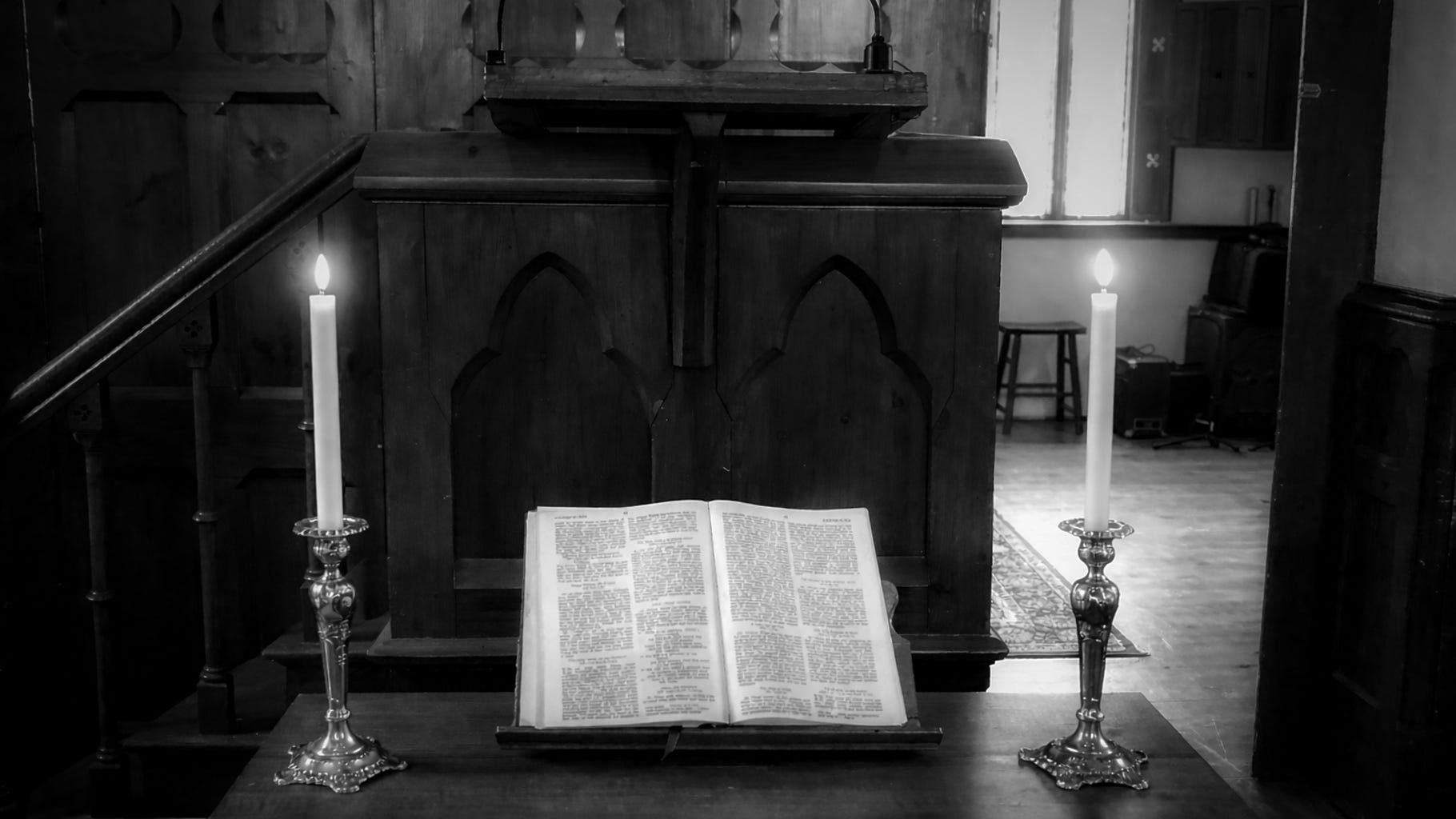
“Fear not, for I have redeemed you;
I have called you by name, you are mine.”
— Book of Isaiah 43:1
Palm Sunday & A Journey Toward Easter
It begins with a road.
Branches laid down. Voices lifted.
Hope rising in the air like something almost within reach.
On Palm Sunday, we remember a procession—joyful, expectant, certain that what is coming will look like victory. A people longing for order, for restoration, for a world set right.
And yet, even as the crowd gathers, another story is already unfolding.
For the One who enters does not come to secure power,
but to reveal it.
Not to meet expectations,
but to transform them.
Not to narrow the world,
but to open it.
This is the beginning of a journey—one that will move through betrayal and silence, through suffering and surrender, toward a life not yet fully understood.
A journey toward Easter.
We enter this week with our own expectations, our own fears, our own definitions of what faith must protect and preserve.
But Holy Week does not begin with certainty.
It begins with a question:
What kind of life are we welcoming?
And what kind of life are we willing to follow—
when it refuses to be contained by fear,
by power,
or by the limits we have drawn around what it means to be human?
I. The Quiet Question
There are questions that arrive loudly—announced in headlines, argued in public, decided in courts.
And there are questions that arrive quietly, almost beneath notice, yet shape everything that follows.
This is one of them:
What does it mean to be human?
Not in theory, but in practice.
Not in abstraction, but in the presence of one another.
What does it mean to live as people of faith—many faiths—in a world that is at once more connected and more divided than we have ever known?
And perhaps more urgently:
Can we live without fear?
II. The World We Are Learning to See
We are not who we once thought we were.
Not because something has gone wrong,
but because something has been revealed.
We understand more now about the human person—about development, identity, relationship, the long interior work of becoming. We see more clearly that human lives do not unfold along a single line.
They branch.
They bend.
They carry complexity within them.
What once appeared simple now appears layered.
What once seemed fixed now reveals depth.
This is not a failure of creation.
It is part of its unfolding.
III. Two Ways of Meeting the Same Moment
Some experience this as disorientation.
The ground feels less certain.
The categories less stable.
The boundaries less clear.
At places like Southern Baptist Theological Seminary and Liberty University, this moment is often met with vigilance—a desire to preserve what has been received, to guard what has been named as true.
Doctrine must be held.
Order must be maintained.
The inheritance must not be surrendered.
This response arises, in part, from care.
From a longing to remain faithful.
But it is not the only way this moment is being understood.
Elsewhere—in traditions shaped by communities such as Virginia Theological Seminary, Seminary of the Southwest, Candler School of Theology, Fuller Theological Seminary, and Union Theological Seminary—the same changes are received differently.
Not as loss.
But as recognition.
A widening awareness of lives long present.
A deeper attentiveness to dignity that was always there, even when it was unseen.
IV. The Shape of Fear—and the Shape of Trust
Fear narrows.
It draws lines.
It tightens definitions.
It teaches us to guard what we love by limiting what we allow.
And when fear enters faith, something subtle shifts.
Love remains—but it becomes conditional.
Welcome remains—but it becomes qualified.
The stranger—once central—becomes uncertain.
Trust, by contrast, opens.
Not without discernment.
Not without thought.
But with the quiet conviction that truth does not require protection by force.
That what is real can endure encounter.
That what is of God will not be undone by being seen more fully.
V. Memory and the Work of Honesty
There is, for many, a memory of a more ordered world.
A time when roles were clearer, expectations more widely shared, life more legible.
But memory is selective.
The coherence of that earlier world often depended on what was not yet acknowledged—on inequalities that were present but unspoken, on lives that were real but not fully recognized.
To remember honestly is not to reject the past.
It is to see it whole.
And to understand that what we are living through now is not simply change,
but the ongoing work of recognition.
VI. The Divine Beyond Our Boundaries
Faith, at its deepest, does not belong to any single moment.
It is not confined to a decade, a culture, a set of assumptions.
For those formed in the Christian story, the claim is even more radical:
That Christ is not bound by time.
That redemption is not limited to what has already been understood.
That the divine life is not exhausted by our current categories.
“Fear not,” the Scripture says.
Not because everything is clear,
but because God is present—even in what is not yet fully known.
VII. The Risk of Becoming Rigid
There is a temptation in every age to secure faith by fixing it.
To codify what has been received.
To draw boundaries that do not move.
To protect truth by making it immovable.
But when faith becomes inflexible, it begins to lose something essential.
Its capacity to listen.
Its openness to mercy.
Its ability to recognize life where it did not expect to find it.
The form remains.
But the spirit tightens.
Jesus meets this tension directly—not by rejecting tradition, but by restoring its center.
“The sabbath was made for humankind,” he says, returning law to life.
“You have neglected the weightier matters—justice and mercy,” he warns, when form overtakes purpose.
“I desire mercy, not sacrifice,” he repeats, calling attention back to what cannot be codified.
Again and again, he places a person in front of the rule—
the hungry, the suffering, the outcast—
and asks, in effect:
What does love require here?
Not in abstraction.
Not in theory.
But in the living presence before us.
For Jesus, truth is not weakened by mercy.
It is revealed through it.
And when faith can no longer respond to the human being in front of it—
when it cannot recognize dignity, complexity, or need—
it is not that truth has been lost.
It is that it has been held too tightly to breathe.
VIII. The Prophetic Boundary
There is a line the Church must not cross.
When faith becomes aligned with power in such a way that it begins to define belonging for others—when it moves from witness to enforcement—it ceases to be free.
This is not a new insight.
It was spoken with clarity in the Barmen Declaration, when the Church declared that its allegiance belongs to Christ alone.
It was lived, at great cost, by the Confessing Church, who refused to allow faith to be absorbed into the ambitions of the state.
Their witness remains.
Not as history alone,
but as a reminder:
The Church is most faithful when it is most free.
IX. On Being Unafraid
To live without fear is not to abandon conviction.
It is to hold conviction without closing the heart.
It is to trust that truth is not so fragile that it must be shielded from complexity.
It is to believe that human dignity—wherever it is found—is not a threat to faith,
but a sign of the divine image at work.
To be unafraid is to remain open enough to see,
steady enough to discern,
and faithful enough to love.
X. A Closing Invitation
We are still learning what it means to be human.
Still learning how to live together.
Still learning how to recognize one another—not as categories, but as persons.
The question before us is not whether change will come.
It is whether we will meet it with fear,
or with the quiet courage of faith.
Whether we will narrow what it means to belong,
or allow it to expand toward the fullness that has always been there.
And whether, in the end, we will live as people who believe—
truly believe—
that the divine is not diminished by our openness to one another,
but revealed within it.
—Ron Starbuck, Publisher
Saint Julian Press, Inc. © 2026
Houston, Texas
The Anglican & Episcopal Witness
Within the life of the Anglican Communion, and the Episcopal Church as part of that communion, there has long been a quiet but persistent instinct:
To hold faith without hardening it.
To preserve tradition without closing the door to insight.
To seek truth not only in doctrine, but in prayer, relationship, and lived experience.
This is not accidental.
It grows out of a way of being Christian that resists extremes—
not out of indecision,
but out of a conviction that truth is often best held in tension
rather than forced into certainty.
Scripture, Tradition, Reason—And
Something More
Anglicanism is often described through the balance of:
Scripture
Tradition
Reason
But lived out, it becomes something more human:
Scripture, read in community
Tradition, received but not frozen
Reason, open to new knowledge and experience
This creates space for:
An attentiveness to human complexity
A willingness to see dignity where it was once overlooked
A capacity to grow without abandoning faith
Mercy at the Center
At its best, Anglican spirituality is not driven by fear.
It is shaped by:
Liturgy that returns, week after week, to confession and absolution
Eucharist that centers grace, not worthiness
Prayer that forms humility rather than certainty
The result is a faith that tends to ask:
Where is mercy needed here?
Where is God already at work?
How do we respond without closing the door?
This is not a faith that abandons truth—
but one that trusts truth is revealed most clearly through love rightly ordered.
A Tradition Resistant to Fusion with Power
Historically, Anglicanism has also learned—sometimes painfully—the danger of fusing Church and state.
That history has left a mark:
A caution.
A restraint.
A recognition that when faith becomes an instrument of power,
something essential is lost.
This is why, within Anglican thought, the warnings echoed in the
The Barmen Declaration resonates so deeply.
Not because they are Anglican in origin,
but because they articulate something Anglicanism has long intuited:
The Church must remain free in order to remain faithful.
Suggested reading
For those drawn toward a faith shaped by mercy, justice and the widening presence of God.
The Gospel of Luke. — A portrait of Jesus centered on compassion, reversal and the lifting up of those on the margins.
The Gospel of John. — A vision of divine presence rooted in love, relationship and abiding.
The Book of Isaiah. — A prophetic witness where justice and mercy flow together as the work of God in the world.
Jesus and the Disinherited, by Howard Thurman. — A profound reflection on the gospel as good news for the oppressed and a call to love beyond fear.
The Universal Christ, by Richard Rohr. — An expansive vision of Christ present in all creation, inviting a faith beyond exclusion.
Being Disciples, by Rowan Williams. — A clear and pastoral guide to a life shaped by forgiveness, humility and grace.
The Cross and the Lynching Tree, by James H. Cone. — A searing theological work that connects suffering, justice and the redemptive meaning of the cross.
A Theology of Liberation, by Gustavo Gutiérrez. — A foundational text on God’s preferential concern for the poor and the call to justice.
A Hidden Wholeness, by Parker Palmer. — An invitation to live an undivided life rooted in integrity, compassion and inner truth.
New Seeds of Contemplation, by Thomas Merton. — A contemplative exploration of the inner life where mercy and awareness meet.
I and Thou, by Martin Buber. — A meditation on relationship as the ground of being, where the divine is encountered in the other.
Life Together, by Dietrich Bonhoeffer. — A vision of Christian community grounded in humility, mutual care and shared grace.
The Epistle to the Romans, by Karl Barth. — A powerful re-centering of the gospel on God’s grace, unsettling human certainty and calling faith back to divine freedom.
Still Evangelical? by Mark Labberton, Fuller Theological Seminary. — A searching reflection on the crisis within evangelicalism, naming how political entanglement can distort the gospel and calling the church back to humility, mercy and faithfulness.
All My Knotted-Up Life, by Beth Moore. — A memoir of faith, courage, and conscience, tracing a journey through evangelicalism’s crisis and a call to a more honest, merciful Christian witness.
The unease is not only institutional. Voices like Beth Moore—formed within evangelical life and now speaking from its edges—have named the same fracture, where faith aligned with power begins to lose its moral clarity and its capacity for mercy.
Nor is this concern limited to one person’s view or institution. Across evangelical life, voices such as Russell Moore, David French, and others have begun to name the same unease—that when faith becomes aligned with power, it risks losing the very witness it seeks to preserve.
“Be merciful, just as your Father is merciful.” — Luke 6:36
Thank you for these thoughtful poems as we enter Holy Week. As you have invited us, may we learn to embrace "a faith that tends to ask:
Where is mercy needed here?
Where is God already at work?
How do we respond without closing the door?"